
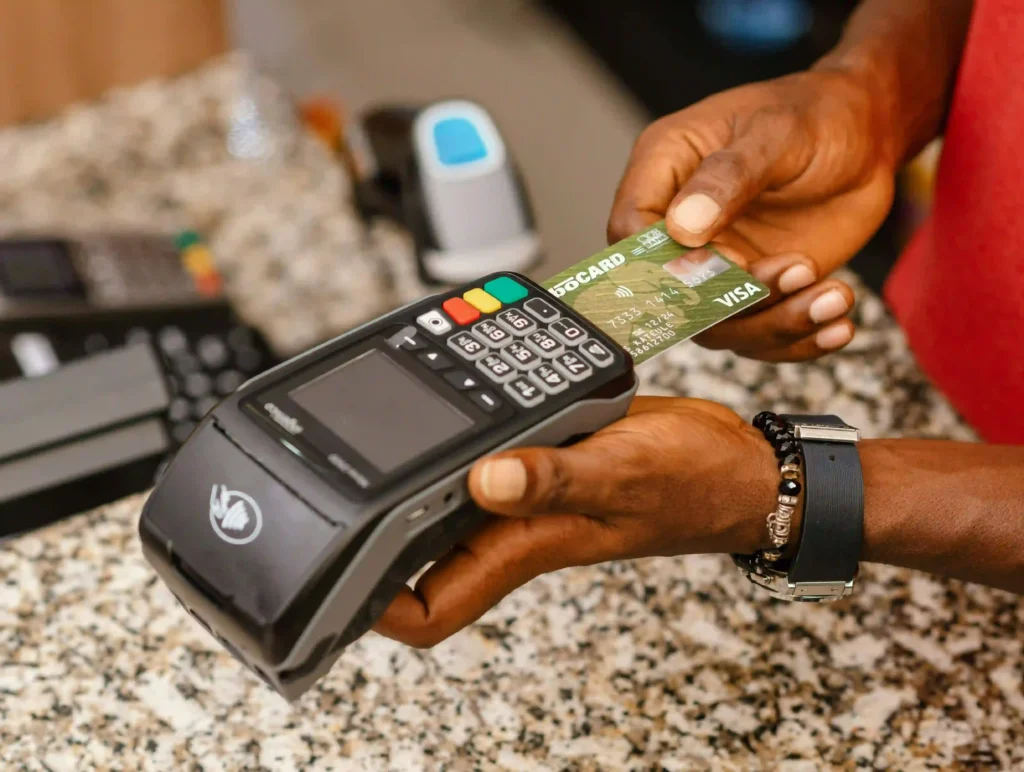
In Lagos, Kano, or Port Harcourt, the queue for a POS machine is often longer than the queue for an ATM. Why? Because Point of Sale (POS) terminals have democratized cash access. If you are researching how to start POS business in Nigeria, you already know that with over 200,000 active agents nationwide, the POS business is no longer just about withdrawing cash. It is now full-fledged agent banking: bill payments, TV subscriptions, fund transfers, and even loan disbursements.
But here is the catch: The Central Bank of Nigeria (CBN) has tightened regulations. If you want to learn how to start a POS business in Nigeria in 2026, you cannot just buy a machine and sit under a tree. You need strategy, registration, and security.
This article will walk you through the exact blueprint—from CBN compliance to daily profit optimization—so you can master how to start POS business in Nigeria successfully..
Why the POS Business is Recession-Proof
Before we dig into the technicalities of how to start POS business in Nigeria, let’s understand the why.
- Cash Dependence: Despite e-banking, 80% of Nigerian transactions are still cash-based.
- Bank Distance: Over 40 million adults are unbanked or under-banked. You become their local bank.
- Recurring Income: Airtime, electricity bills, and cable TV subscriptions generate repeat commissions.
When done right, a single POS terminal can generate ₦5,000 – ₦15,000 daily in profit. With two terminals, you are looking at six figures monthly.
Step 1: Understand the Two Types of POS Business Models
To correctly answer how to start POS business in Nigeria, you must choose a model:
| Model | Description | Capital Needed |
| Mobile POS (Aggregator) | You partner with a fintech (e.g., Opay, Moniepoint, Paga). No physical bank branch required. | Low (₦50k – ₦100k) |
| Bank-Owned POS | You become a super agent for a commercial bank (e.g., UBA, GTCO, First Bank). Higher compliance. | Medium (₦150k – ₦300k) |
Recommendation for beginners: Most experts advising on how to start POS business in Nigeria suggest starting with a mobile money aggregator. Moniepoint and Opay have simpler onboarding and higher commission structures for bills payment.
Step 2: Fulfill the CBN and NIBSS Requirements
As of 2026, the CBN mandates that every POS agent must be registered with NIBSS (Nigeria Inter-Bank Settlement System). If you are serious about how to start POS business in Nigeria, here is what you need:
- Business Registration: Register a business name with CAC (Corporate Affairs Commission). Cost: ~₦15,000 (including name search).
- BVN & NIN: Your personal BVN and National Identification Number are mandatory.
- Agent Code of Conduct: You must sign an undertaking against fraud.
- Two Guarantors: Most aggregators require two guarantors (often existing agents or civil servants).
Pro tip: Do not skip CAC registration. Unregistered agents are being delisted in the ongoing CBN mop-up. You can check this on official CBN website.
Step 3: Calculate Your Startup Capital (Realistic Breakdown)
Here is a realistic budget to start POS business in Nigeria with one terminal:
| Item | Cost (₦) |
| CAC Registration | 15,000 |
| POS Terminal (Android-based) | 40,000 – 60,000 |
| Float (cash to dispense) | 30,000 – 50,000 |
| Thermal paper rolls (100 pcs) | 5,000 |
| Signage & branding | 10,000 |
| Umbrella/table (optional) | 15,000 |
| Total (minimum) | ₦115,000 |
Note: Many aggregators offer a “zero-cost terminal” if you commit to a certain transaction volume (e.g., 500 transactions/week). Always ask for this option.
Step 4: Choose the Best POS Aggregator in Nigeria
Selecting the right partner is a critical part of how to start POS business in Nigeria. Compare these four:
- Moniepoint: Best for rural areas. High commission on bill payments (up to 1.5%).
- Opay: Best for cash withdrawal speed. Lower float requirement.
- Paga: Best for multiple services (insurance, travel booking).
- Firstmonie (First Bank): Best if you want bank credibility.
Our top pick for 2026: Moniepoint. Why? Their agent network grows faster, and they offer same-day settlement.
Step 5: Register and Get Approved (Step-by-Step)
To complete the process of starting a POS business in Nigeria, follow this exact sequence:
- Download the aggregator’s agent app (e.g., Moniepoint Business).
- Fill in your BVN and NIN – ensure they match your CAC name.
- Upload your utility bill (not older than 3 months) for address verification.
- Pay the registration fee (₦10,000 – ₦20,000 typically).
- Attend a virtual training (mandatory – covers AML and KYC rules).
- Receive your terminal within 3–7 business days.
Timeline: From application to first transaction – 10 to 14 days.
Step 6: Set Your Transaction Charges (Legally)
A major part of how to start POS business in Nigeria is understanding the CBN maximum charges for POS withdrawals.
| Withdrawal Amount | Maximum Charge |
| ₦1 – ₦2,500 | ₦50 |
| ₦2,501 – ₦10,000 | ₦100 |
| ₦10,001 – ₦20,000 | ₦150 |
| Above ₦20,000 | ₦200 |
Pro Tip for Profit: Do not rely only on withdrawals. Push bill payments (electricity, WAEC PINs, etc.)—they typically offer a higher commission of 1.5% – 2.5%.
Step 7: Risk Management – Security & Fraud Prevention
When you learn how to start POS business in Nigeria, you must also learn how to protect your money, because agents are prime targets for criminals. Here is how to survive:
- Do not operate after 8 PM unless your shop is secure.
- Install CCTV – even a ₦25,000 camera deters fraud.
- Keep float below ₦50,000 in cash. Replenish twice daily.
- Train customers to enter PIN themselves – reduces liability.
- Beware of “swap fraud” – criminals swap your SIM card. Never share your agent code.
Step 8: How to Market Your POS Business Locally
Even the best POS location fails if no one knows. Do this:
- Use a bright, readable sign: “Agent Banking – Withdraw, Pay Bills, Transfer”.
- Partner with a shop owner (provision store, pharmacy) – pay them 10% of your profit.
- Offer a loss leader: First withdrawal free for new customers.
- Join WhatsApp groups for your street/estate – announce daily that you are open.
Step 9: Track Profit & Scale
Month 1 target: ₦90,000 net profit (after float and paper costs).
Month 3: Add a second terminal.
Month 6: Register as a Super Agent – you can then onboard sub-agents and earn override commissions.
Use free tools like POSProfit Tracker (Google Sheet template) to log every transaction.
Common Mistakes to Avoid When Starting a POS Business in Nigeria
- Mistake #1: Using personal SIM for transactions – leads to network throttling.
- Mistake #2: Keeping all float in one place – split between bank and cash.
- Mistake #3: Ignoring daily reconciliation – you must match your app balance with physical cash every night.
- Mistake #4: Choosing an aggregator solely by low registration fee – check their settlement speed.
Frequently Asked Questions (FAQ)
Q: Can I start a POS business with ₦50,000 in Nigeria?
A: Yes, if you skip CAC registration temporarily (not recommended) and use a second-hand terminal from a trusted source. But ₦100k is the recommended minimum.
Q: Is POS business profitable in 2026?
A: Yes. Average daily profit per terminal is ₦5,000 – ₦12,000. However, competition has lowered margins on withdrawals, so diversify.
Q: Do I need a shop?
A: No. Many agents operate from a table under a canopy. But a fixed location builds trust.
Q: What happens if I lose the POS terminal?
A: Report immediately to your aggregator. Some have insurance for ₦2,000/month. Otherwise, you pay replacement cost (₦50k – ₦80k).
Final Verdict: Is POS Business for You?
Learning how to start POS business in Nigeria is easy part. The hard part is consistency, security, and customer service. But if you follow this blueprint—register with CAC, choose Moniepoint or Opay, manage risk, and market aggressively—you will build a daily cash flow machine.
The banks are not coming to your village. You bring the bank to them.
Ready to start? Download the Moniepoint Agent App today. Your first ₦10,000 profit is 48 hours away.
Disclaimer: Financial figures are based on January 2026 market rates in Nigeria. Always confirm current fees with your chosen aggregator and CBN guidelines.
[…] Also read how to start a POS business in Nigeria […]